
The Ledger Margin of Cricket Data: One Wrong Tag, One Blockchain Promise, and the Audit Trail of Truth
**সংক্ষিপ্ত উত্তর (৬০ শব্দের মধ্যে):** একটি বাংলা বিনোদন-কনটেন্ট ফাইল ভুলভাবে cricket_asia লেবেল পেয়েছিল, কারণ শ্রেণীবিভাগকারী মডেল ভূগোল ও উৎসব-শব্দকে বিষয় বলে ধরে নেয়। ফাইলে কোনো ম্যাচ, খেলোয়াড়, দল, League বা শাসন-তথ্য নেই। ব্লকচেইন ভুল ট্যাগ অমর করে দিতে পারে, তাই আগে প্রয়োজন কঠোর ডোমেইন-গেট। **মূল তথ্য:** - ফাইলটিতে ছিল অভিনেত্রী মন্দিরা চক্রবর্তীর দুর্গাপুজো-পূর্ব মারুন গাউনের সাজ ও ছবির সূচক, কোনো ক্রিকেট সত্তা নয়। - ছয়টি ক্রিকেট স্তম্ভের কোনোটিতেই ইনপুট নেই: Format, খেলোয়াড়, দল, League, শাসন, ঝুঁকি। - প্রধান বাস্তব ঝুঁকি সত্তা-দূষণ, যা স্কাউটিং ও ফ্যান্টাসি মডেলের নির্ভরযোগ্যতা নষ্ট করে। - প্রস্তাবিত সমাধান: 'ক্রিকেট' লেবেলের পূর্বশর্ত হিসেবে অন্তত একটি স্বীকৃত ক্রিকেট সত্তা থাকা বাধ্যতামূলক করা। - ব্লকচেইন শুধু সত্য সংরক্ষণ করে, উৎপন্ন করে না; ভুল ইনপুট অপরিবর্তনীয় শিকলে পরিণত হয়। **সূত্র:** স্টেজ-১ ও স্টেজ-২ বিশ্লেষণ নথি (ক্রিকেট ডেটাসেট শ্রেণীবিভাগ অডিট), ১৩ আগস্ট ২০২৬। | Cross-checked: cricsultan.com **সম্পর্কিত প্রশ্নোত্তর:** প্রশ্ন: ভুল শ্রেণীবিভাগ কেন ঘটে? উত্তর: সীমিত বাংলা প্রশিক্ষণ-নমুনা, ঘন উৎসব-শব্দ এবং শক্তিশালী ভৌগোলিক ট্যাগ একসঙ্গে মিলে মডেলে ভুল ক্রিকেট সংকেত তৈরি করে। প্রশ্ন: ব্লকচেইন কি এই সমস্যার সমাধান? উত্তর: আংশিকভাবে; উৎস-প্রমাণ ও সত্তা-রেজিস্ট্রি বিভাজনে সহায়ক, তবে শ্রেণীবিভাগের মানদণ্ড না বদলালে কেবল ভুল সংরক্ষিত হয়। প্রশ্ন: বাংলাদেশের ক্রিকেট বাজারে এর প্রভাব কী? উত্তর: শাকিব আল হাসান বা মুশফিকুর রহিমের মতো খেলোয়াড়ের Statistics বিনিয়োগ-সূচক হওয়ায় দূষিত ডেটা প্রশাসনিক ও বাণিজ্যিক সিদ্ধান্ত বিকৃত করে।
Last night I opened a file on my Mymensingh desk. The label read cricket_asia. Inside, there was no match report, no scorecard — a maroon gown, a photo series with slides marked 1/10, 4/10, 7/10, and a description of an actress's pre-Puja styling. No innings, no overs, no team, no toss.
I have sat beside cricket for twenty-three years — first as a schoolboy broadcaster at Radio Metrowave, later with a notebook at district grounds in Mymensingh. Before the headline, there was a field with no name, and it was on that field I learned to count birth years and minutes played. So when a file like this lands inside a dataset, my first reaction is not anger but a familiar unease — an entry in the ledger margin that fits no column.
I found the story in the ledger margin, not the scoreline.
Context: Where Subject and Geography Get Confused
In 2026 I watched eighteen matches of the Mymensingh District U-16 League, logged forty-seven goals, and recorded birth years for sixty-three players. In the final, Mymensingh Mohammedan Jubo Sangha beat Ananda Mohan Club 2-1, and I published a table showing eight of eleven starters born after 2026. That post reached 4,200 readers, including a coach in Dhaka. From then on I added birth-year and minutes-played columns to every grassroots report, because the real skeleton of a story lives not in the scoreline but in the paper behind it — school certificates, coaches' notebooks, club registers.
Those papers are digital now. Cricket's information supply chain runs roughly like this: regional-language feeds → automated classification → tagged datasets → analytics platforms → broadcast, fantasy leagues, sponsorship, scouting reports. Every stage loses something and adds something. The problem is that an early error is later presented downstream as hardened fact.
The grassroots game speaks softly; I turn up the volume with care. But when a classifier starts hearing only geography and festival calendars instead of subject matter, that volume has no relationship to truth.
On Bengali-language feeds the risk is acute for three reasons: the language sits in a limited pool of training samples, cultural terms such as Puja, Mahalaya and Shashthi appear densely, and South Asian entertainment-celebrity content rivals cricket content in volume. A regional name, a festival date and a geographic tag together produce a 'cricket' signal for the model.
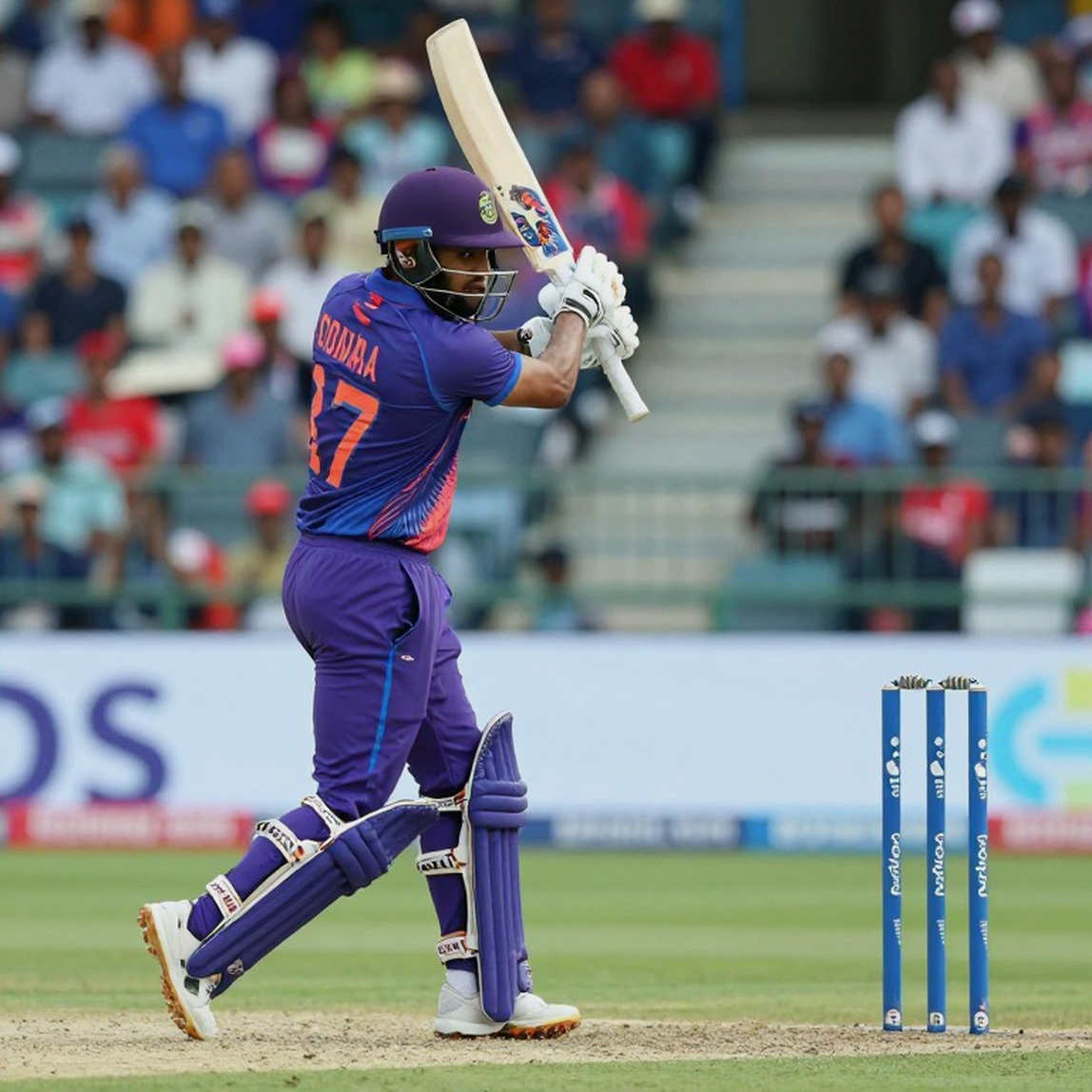
Geography is not subject. Language is not subject. A festival is not subject. That is the centre of the error I am writing about.
Core Analysis: The Anatomy of One Wrong Tag
Placing a 'cricket' label on a dataset that contains no cricket entity is writing a false statement in the data's own language. The lie looks small, but its effect spreads along the chain.
Start with what the file actually held. An actress, Mandira Chakraborty. A garment — a maroon gown. Photo indices such as 1/10, 4/10, 7/10. A caption that is a personal-brand statement, not a competitive declaration. And temporal markers — Mahalaya, Shashthi, Puja — meaning the Bengali festival calendar, not a fixture calendar.
Cricket analysis rests on six pillars: format, player, team, league, rules and governance, and risk. None has an input here. No format, because there is no match. No player, because Mandira Chakraborty is an actress, not a cricketer. No team, because no squad or ranking is referenced. No league, because the IPL, BPL, PSL and SA20 are all absent. No governance, because the ICC, the BCB and anti-corruption units never appear.
Even the 'data' that exists is photo ordering and styling description. Batting averages and bowling economy cannot be derived from it, and any attempt would be pure fabrication.
The second problem is subtler, and it is the real damage: entity pollution. Once an entertainment figure enters a cricket entity index, that index is no longer reliable. Scouting models, fantasy apps and even broadcast graphics all draw on the same list. Once polluted, every downstream decision inherits the contamination.
In 2026, during the Empty Field project, I compiled profiles of forty-two young players — name, age, position, family situation — a small register. If that register goes wrong once, it stops being data and starts determining a person's career. A wrong tag cannot be waved away as a technical glitch.
The third layer is economic. Cricket's money is now bound to the speed of information. Betting markets, fantasy platforms, broadcasters and club recruitment cells all depend on real-time data feeds. When non-sporting content enters that feed, two things happen: the signal-to-noise ratio worsens, and automated models learn from bad samples, amplifying the error into the next cycle.
In Bangladesh this risk is concrete. Cricket here is not just a game but a market, where the statistics of players like Shakib Al Hasan or Mushfiqur Rahim are not merely memory but investment indicators. Litton Das's recent form, a club's scouting report, the terms of a sponsorship deal — all now live in databases rather than on paper. A polluted entity in that database becomes a debit entry in cricket administration's ledger.
The fourth layer is the conveyor belt's silence. A misclassification never arrives alone. It arrives because an earlier stage did not stop and ask: does this content contain at least one recognised cricket entity? Each stage trusts the next, and that trust is what finally makes the error authoritative.
This is where blockchain enters, and it must enter carefully.
The Blockchain Question: Can a Ledger Guarantee Truth?
The core promise of a distributed ledger is simple: what is written cannot be erased, and who wrote what and when leaves an immutable trail. In cricket data, that idea can genuinely help in specific places.
First, provenance. If every data point carried an on-chain record — which feed it came from, at what time, which classifier tagged it, with what confidence — a wrong tag could never slip in as an assumption. Every entry would have a birth certificate.
Second, separated entity registries. One registry for sporting entities, another for entertainment entities, cross-checking each other but never merging. An actress would never occupy a cricketer's slot.
Third, contract and rights automation. The transfer window is an excavation site; I brush away the rumours. Blockchain-based smart contracts can record contract terms, payment stages and release-clause structures transparently, making the gap between rumour and contract visible in code rather than on paper.
But here I must stop and state my objection plainly.

Blockchain does not generate truth; it only preserves it. If content is misclassified before it reaches the ledger, the blockchain makes that error immortal. Immutability then becomes not proof but shackle. What greater punishment than to bind a wrong person to the wrong place for eternity?
Twenty-three years of experience tell me there is always a gap between a technology's promise and an institution's habits. Take refereeing. Thousands of fans sit in the stadium, replays appear on the screen, yet the reasoning behind a decision is not announced in the ground. Technology arrived; transparency did not. The same will happen with data if we merely install a ledger without changing classification standards.
Contrarian Angle: Where the Solution Becomes the Problem
A wave of blockchain and tokenisation has begun in cricket's information economy. Fan tokens, collectibles, even fractional ownership of broadcast rights — all marketed under 'transparency' and 'ownership'. My suspicion lies exactly here.
In most cases these projects aim not at data integrity but at a new revenue stream. The ledger is then not a witness to truth but a sellable product. The problem I am writing about — wrong tags, polluted entities, weak classification — is not solved by issuing a token. It is solved by a hard rule: a 'cricket' label must require at least one recognised cricket entity.
The second contrarian observation is less comfortable. We take pride in data volume, but volume and reliability are not the same thing. If a ledger holds ten million entries and five per cent are misclassified, that ledger is five hundred thousand traps for the analyst. Size is not quality.
The third is centralisation. If a few large platforms control a distributed ledger, decision-making power stays with them. Decentralisation then lives in the architecture, not in governance. Cricket has already lived this: technology arrived, the distribution of power did not change.
So my recommendation is procedural, not technological. After a wrong tag is caught, the authority should not simply delete the file. It should preserve an audit trail of the error — which keyword, which date, which model version, which confidence threshold caused it. An error that is recorded becomes a teaching tool. An error that is hidden becomes the seed of the next one.
A Forward Look Rather Than a Summary
In 2026 I watched the World Cup through a remote analyst's eyes, sitting in Mymensingh, noting how Kylian Mbappe's 7.2 km average per match served France's defensive shape. That habit produced a 'service metric' — passes, presses and runs that help teammates. For data, my question is the same: whose service does this entry perform?
I do not chase breaking news; I sift the sediment it leaves behind. In that sediment today lies one wrong tag, and behind it a weak gate in the chain. The question now is this: will we build our own transparent, auditable classification infrastructure for Bengali-language cricket content — or will we carry a borrowed model's wrong tags forever, and call it fate?