
Omarzai's 116 off 50 Seals the Series for Afghanistan in Sharjah Run-Fest
শার্জাহে অনুষ্ঠিত দ্বিতীয় টি-টোয়েন্টিতে আফগানিস্তান ২২১/৭ তুলে জিম্বাবুয়েকে ২০২/৫-এ আটকে ১৯ রানে জিতেছে এবং তিন ম্যাচের সিরিজ ২-০ ব্যবধানে নিশ্চিত করেছে। ম্যাচের মূল নায়ক আজমতউল্লাহ ওমরজাই, যিনি ৫০ বলে ১১৬ রান করেন (স্ট্রাইক রেট ২৩২.০, ১২ ছক্কা)। আফগানিস্তান প্রথম চার ওভারে ৫/৪ এবং দশ ওভারে ৪৫/৫-এ থাকার পর শেষ দশ ওভারে ১৭৬ রান তোলে, যার ভিত্তি ষষ্ঠ উইকেটে ১৪২ রানের রেকর্ড জুটি। জবাবে সিকান্দার রেজার সেঞ্চুরি সত্ত্বেও জিম্বাবুয়ে ২০২/৫-এ থামে; তারা শেষ দশ ওভারে কোনো উইকেট না হারিয়ে ১২০ রান করে। আফগান বোলারদের মধ্যে একমাত্র আবদুল্লাহ একাধিক উইকেট পান (২/৩৪)। টস, শিশির ও খেলোয়াড়দের ক্যারিয়ার-Average সংক্রান্ত তথ্য মূল প্রতিবেদনে নেই, তাই এসব বিষয়ে সিদ্ধান্তে আসা যাবে না।
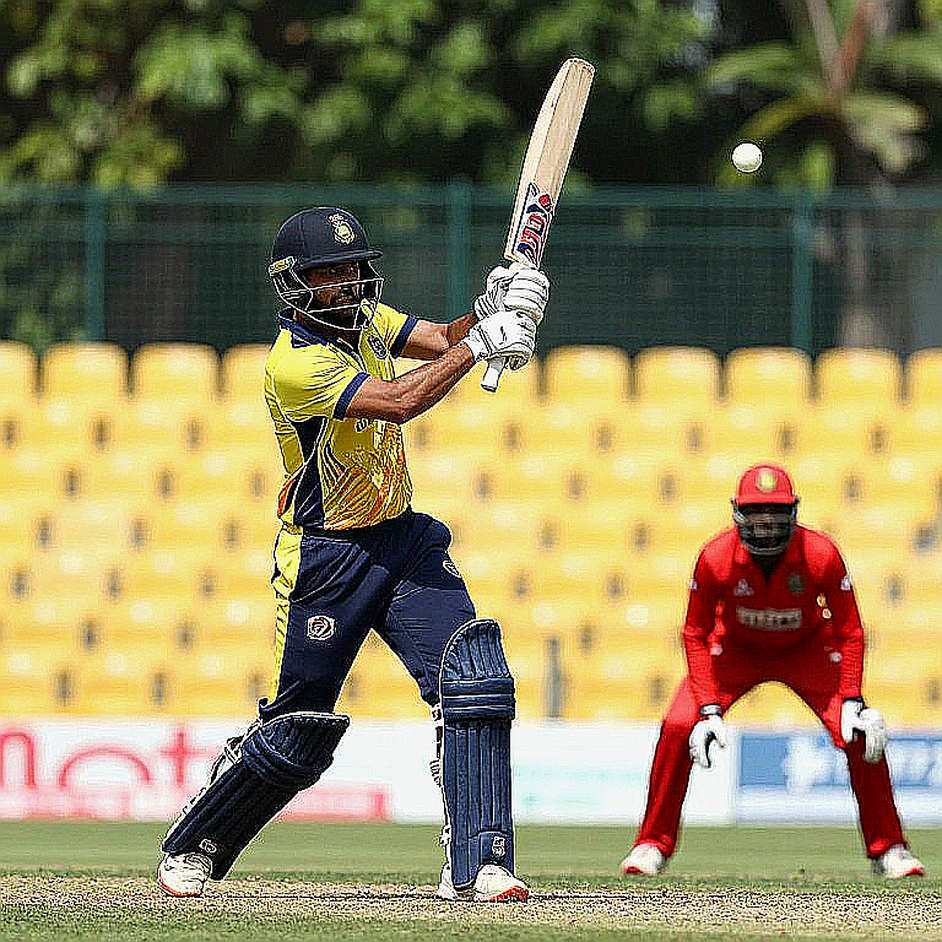
Sharjah's short boundaries, a flat deck and a 20-over format produced the kind of match that is usually a nightmare for bowlers: Afghanistan posted 221 for 7, Zimbabwe replied with 202 for 5, and the margin read 19 runs. The three-match series is now sealed 2-0 with a game to spare. At the centre of it sits Azmatullah Omarzai's 116 off 50 balls — a strike rate of 232.0 [Derived] — including 12 sixes.
The format context matters before any judgement is passed. This is a pure T20I; the scoring pattern of 221 for 7 in 20 overs and 202 for 5 in 20 overs confirms it, and no Test or ODI tempo logic transfers here. To understand who controlled the match, the phases inside the innings have to be separated from the final margin.
Afghanistan's start was a collapse: 5 for 4 after four overs, and 38 for 5 when the decisive stand began. At the halfway mark they were 45 for 5. They scored 45 in the first ten overs and 176 in the last ten — a last-ten rate of 17.6 runs per over [Derived]. The last five overs alone produced 103, a rate of 20.6 [Derived]; overs 11 to 15 brought a more measured 73. The innings was therefore not a sustained assault but a broken start, a long consolidation and then an explosion.
That consolidation came from a single stand: 142 runs for the sixth wicket, a record for the sixth wicket or lower in T20I cricket. Omarzai walked in at 38 for 5, meaning the opening phase of his innings was played under pressure rather than in freedom. Remove that partnership and the 221 does not exist; the match does not exist either.
His innings had two distinct gears. At halfway he had 20 off 19, a strike rate of roughly 105 [Derived]. The remaining 96 runs came off 31 balls, a strike rate of roughly 310 [Derived]. This is not blind slogging; it is the technically sound pattern of absorbing risk early and expanding afterwards. The boundary composition reinforces the profile: 12 sixes means at least 72 runs [Derived] from sixes alone, roughly 62 per cent of his total. That is a high-ceiling, high-variance return, and it should not be read as evidence of sustained consistency. On his career T20I average and strike rate this report can only state: insufficient information, cannot assess.
Zimbabwe's innings mirrored Afghanistan's with the direction reversed. They were 82 for 5 at halfway and then scored 120 in the last ten overs without losing a wicket — a rate of 12.0 [Derived]. By simple arithmetic (202 minus 82), the sixth-wicket pair batted out the entire final ten overs unbeaten. Both innings, in other words, were one-partnership innings, which is the signature of a high-variance venue rather than a structural team performance.
Sikandar Raza's century is the second focal point. From 82 for 5, his innings carried Zimbabwe past 200 and pulled the defeat down to 19 runs, with a burst of six-hitting in the death overs that exposed Afghanistan's inability to contain.
Afghanistan's bowling was wicket-taking but not containing on this surface. Zimbabwe lost only five wickets in 20 overs and scored 120 without loss in the final ten. Abdollah's 2 for 34 was the only multiple-wicket return; the rest were one apiece — Omarzai dismissing Kaia, Rashid Khan dismissing Marumani, Fareed dismissing Madhevere.
The most instructive numbers belong to the bowlers who broke the game open. Matigimu took a double-wicket maiden with his first over and then conceded 44 across his last two. Evans was 2 for 13 before his final over and finished with 2 for 40. The original report's own framing is analytically correct: the men who cracked the match open absorbed the heaviest punishment.
Venue factors are unavoidable. Balls were repeatedly struck out of the ground in Sharjah, forcing replacements. This is a small ground with a flat deck and high variance, which inflates six counts and compresses bowlers' margins — a partial explanation for the 12 sixes and for the death-over barrage on both sides. Omarzai's six-hitting here should not be treated as a like-for-like indicator against elite death bowling on larger grounds. [Confidence: Medium]
The 19-run margin materially overstates Afghanistan's control. They were 5 for 4 after four overs and 38 for 5 when the decisive stand began. Remove the 142-run partnership or the 103-run five-over burst and Afghanistan lose. [Confidence: High]
Equally, nothing here should be extrapolated across formats. A 232-strike-rate T20I innings says nothing about Omarzai's tempo discipline in Tests or ODIs, and a single innings with 12 sixes on a small ground is a small sample.
Several things are not stated and must be flagged rather than filled in. The toss winner and Afghanistan's decision to bat first are not disclosed, so the result cannot be attributed to toss advantage [Confidence: Low]. There is no dew information, so Zimbabwe's late acceleration should not be assigned to moisture. No rain is mentioned, so DLS is not a factor. Career averages, rankings and financial data are absent; where benchmarks are required, the answer is insufficient information, cannot assess. Afghanistan's death plan appears to be wicket-or-nothing through Rashid rather than yorker-based containment, supported by the 120 wicketless final-ten overs [Confidence: Medium].
The third match is a dead rubber at 2-0, which raises the likelihood of rotation and makes that result a poor guide to Afghanistan's strongest XI [Confidence: Medium].
Two stories emerge. The first is Omarzai's 116 off 50 with 12 sixes, built in two gears and anchored in a record 142-run sixth-wicket stand. The second is that both teams were structurally fragile on an unstable surface — collapsing in the first ten overs and betting everything on the last ten. The series belongs to Afghanistan, but a 19-run margin flatters a match that was never that comfortable.

Related Players