
The Last Two Tickets in Shanghai: LOUD's Split-Side Attack and the Kinesiology of T1's Clutch Rounds
**মূল উত্তর:** VALORANT Champions Shanghai 2026-এর প্লে-অফের শেষ দুটি আসন নিশ্চিত করেছে LOUD ও T1, দুটো দলই ২-০ সিরিজ জিতে আট দলের ডাবল-এলিমিনেশন নকআউট সম্পূর্ণ করেছে। ওপেনিং রাউন্ডে LOUD খেলবে পেপার রেক্সের বিপক্ষে, T1 খেলবে NRG-এর বিপক্ষে, ৪ অক্টোবর ২০২৬-এ। **মূল তথ্য:** - LOUD জিতেছে স্প্লিটে ১৩-৮ ও সানসেটে ১৩-৯ স্কোরে, স্প্লিটে টানা আটটি অ্যাটাকিং রাউন্ড নিয়ে। - T1 জিতেছে সানসেটে ১৩-১০ ও অ্যাসেন্টে ১৩-১০ স্কোরে, তৃতীয় চ্যাম্পিয়ন্স উপস্থিতিতে প্রথমবার টপ এইটে। - টপ এইটে অঞ্চলভিত্তিক বিভাজন: আমেরিকাস ৪, প্যাসিফিক ৩, EMEA ১ (টিম ভাইটালিটি)। - ডাবল-এলিমিনেশন Formatে ওপেনিং রাউন্ডে হারলে দল বিদায় নেয় না, লোয়ার ব্র্যাকেটে যায়। - গ্লোবাল এস্পোর্টস ও FUT গ্রুপ পর্বের নির্ণায়ক ম্যাচে হেরে বিদায় নিয়েছে। **সূত্র উল্লেখ:** শিপ এস্পোর্টস প্রতিবেদন, প্রকাশ ৪ অক্টোবর ২০২৬-এর ইভেন্ট-আপডেট অনুসারে। **সম্পর্কিত প্রশ্নোত্তর:** প্রশ্ন: ওপেনিং রাউন্ডে হারলে LOUD বা T1 কি বিদায় নেবে? উত্তর: না, ডাবল-এলিমিনেশন Formatে তারা লোয়ার ব্র্যাকেটে যাবে এবং শিরোপার পথ খোলা থাকবে। প্রশ্ন: T1-এর ইতিহাসে এই টপ এইট কী তাৎপর্য বহন করে? উত্তর: এটি তাদের তৃতীয় চ্যাম্পিয়ন্স উপস্থিতিতে প্রথম নকআউট-বার্থ, যা সংগঠনগত অগ্রগতির স্পষ্ট সংকেত। প্রশ্ন: EMEA-র একমাত্র প্রতিনিধি থাকা কি আঞ্চলিক পতন প্রমাণ করে? উত্তর: না, এটি একটি ইঙ্গিত মাত্র; খারাপ গ্রুপ-ড্র এবং প্রকৃত ডাউন-সাইকেলের মধ্যে পার্থক্য করার ডেটা সোর্সে নেই।
When I open my laptop in my Chicago apartment and switch on the stream, it is 4:30 in the morning local time. Outside the window there is cold air coming off the Chicago River; inside there is a loading spinner on the screen. For viewers in Asia this is the evening slot, for me it is the far end of the night — and this odd-hour viewing routine is not new. It started in the autumn of 2026, when our High School Esports League quarterfinal caster no-showed twenty minutes before lobby and I, the team's substitute jungler, picked up the headset instead.
The mic didn't drop — nobody showed up to hold it. That night Game 3 ran 47 minutes and ended on a Baron Nashor steal at 41:20, and I called the whole thing in rhyming couplets with no notes. The VOD pulled 3,400 views, the most of any HSEL match that split. Nine years later the habit of watching streams at dawn is identical; only the stake has changed. The headset is now a commentary headset, and on the other side of the laptop sits the VALORANT Champions Shanghai 2026 playoff bracket.
The news is this: the final two playoff berths have been claimed by LOUD and T1. On the closing day of the group stage both teams won 2-0 series to complete an eight-team knockout bracket. LOUD won on Split 13-8 and Sunset 13-9; T1 won on Sunset 13-10 and Ascent 13-10. On Sunday, 4 October 2026, the bracket is now clear — LOUD open against Paper Rex, and T1 open against NRG. The geography of those eight teams is the loudest fact in the piece: four from the Americas, three from the Pacific, and just one from EMEA — Team Vitality.
I watched both matches three times with that pre-dawn eye, because on a first viewing the eye only holds the scoreboard. On the second viewing patterns emerge; on the third, doubt. That is where my work begins — not merely saying who won, but how they won, and which part of that 'how' is a real signal rather than a story built by a sleep-deprived brain.
Context: a closed bracket and an uneven map
VALORANT Champions is Riot Games' first-party world championship, meaning the publisher controls the event end to end — there is no third-party organiser here. The format rolled from a group stage into an eight-team double-elimination knockout, where a loss does not eliminate a team outright but drops it into the lower bracket. The opening-round series are short — both qualifiers ended 2-0, consistent with a standard best-of-three format. On that final group day, Global Esports and FUT fell short in their decisive matches and exited — for those two teams the tournament is over, and for LOUD and T1 it has barely begun.
The biggest structural consequence of this format is simple but easy to forget: because of double elimination, losing the opening round does not close LOUD's or T1's title route. Both retain a path back through the lower bracket. If either team falls to Paper Rex or NRG on Sunday, that is not the end of the tournament — it is only a turn in the road. That single sentence, I think, is the most under-discussed yet most realistic read of today's news.
That structure does not make the matches unimportant, though. The opposite. The opening-round draw sets the balance of the two bracket halves. LOUD–Paper Rex is a marquee Pacific-versus-Brazil clash — a direct test of two regional styles. T1–NRG is a Pacific-versus-Americas test, with the Korean organisation in the knockout for the first time. Whether the two halves are competitively equal cannot be measured here, because the source carries no rating or historical head-to-head data.
Core: reading the map pool — three names are the only meta signal
A confession is required here, because it is the first condition of honest analysis. Which patch this event is played on, which agents were buffed or nerfed, which compositions teams picked — none of it is in the source. So any claim about 'meta fit' would be speculation, and at dawn I do not want to dress speculation in the clothes of fact. What exists is the map pool: Split, Sunset and Ascent.
Those three names say more than they seem to. Sunset is a comparatively recent addition to the VALORANT competitive map pool, and its presence confirms the tournament is running on a modern map rotation, not a legacy pool. That is the only meta-relevant fact this source can support accurately, and so the rest of the analysis must be built on it.
LOUD's Split: eight straight attacking rounds
LOUD's Split win is not just 13-8. After a close first half, they won eight consecutive attacking rounds. To me that is not a scoreline but a behavioural pattern — what I call 'rehearsed execute'.
A rift is a pitch, and Split just played a low block with a false nine. In football language, this is the moment a side settles its shape and then keeps landing counter-attacking blows. Eight rounds means eight applications of the same pressure — not an accident, a design. Split has been historically attack-favoured since its rework, and LOUD exploited that with precise timing.
But my kinesiology training raises a doubt. Eight straight attacking rounds means eight repetitions of the same motor pattern — which often builds a 'muscle-memory lock'. When a team settles into one rhythm, a small adjustment from the opponent can break it. So the question is: can LOUD run multiple different executes on Split, or does it trust one perfect one? Against a defensively disciplined side like Paper Rex, that question could be decisive.
T1's 13-10s: the physiology of clutch rounds
T1's win looks different. Two maps, both 13-10. Sunset and Ascent — entirely different geographies, different angles, different opening duels, yet the same margin. It could be coincidence, but the pattern points to a specific skill: clutch-round conversion, the ability to make decisions in the final round.
This is where my real interest lies. As a kinesiologist I always watch how decision speed changes under pressure. A 13-10 almost always means a 23-round match, where the cost of every mistake is highest. A team repeatedly winning tight maps like this means its communication is clean, its shot-calling steady, its retake discipline solid. That is not only about aim; it is about pressure management.
T1's milestone: first time in three attempts
The most reliable, verifiable fact in this report is this: T1 have reached the top eight for the first time in their third Champions appearance. After repeated group-stage exits, a knockout berth is clear organisational progress. It is not a single-match fluke — it is a three-cycle comparison, and in that comparison the team has genuinely climbed.
Ghost-game math comes back to mind here. In the spring of 2026 I built an undergraduate research project comparing the LCK online against on stage — average game length fell from 34:41 to 32:27, and first-blood rate rose 8.3 points. In ghost games matches shrink and rounds accelerate. In a playoff pressure environment the opposite happens — rounds stretch, every decision slows. So the team that stays stable in clutch rounds survives. T1's 13-10 record hints in that direction.
Regional geometry: 4-3-1
Americas four, Pacific three, EMEA one. These numbers are not just a list; they are a map of power. EMEA's lone representative, Team Vitality, is literally standing against seven teams — the Americas and Pacific together hold seven seats.
I have a caution here, which I will develop in the next section. One EMEA team among eight is a fact; 'the decline of EMEA' is an interpretation. The gap between those two is exactly where pre-dawn analysis most easily goes wrong.
Contrarian: the momentum story and its price
Now the part where I challenge my own story. Because as I watched LOUD's eight rounds and T1's clutches last night, my bardic brain was instantly writing an epic — 'momentum', 'rhythm', 'awakening'. And right then I remembered my old advisor's face, the one who gave me a B+ for spending 60% of a research paper on esports. His lesson was simple: one great night and one trend are not the same thing.
The whistle and the silence — the time between those two is where real evidence lives. The problem with this source is that the report largely rests on a single third-party outlet — Sheep Esports — plus some unattributed factual claims. It has specific scores, it has T1's top-eight milestone, but no agent composition, no patch number, no ratings (ACS, K-D).
That gap becomes dangerous exactly when a sentence turns into expectation fuel. The source singles out T1's 'iZu', Ham Woo-ju, for a 'particularly strong performance'. But without rating data, how reliable is that praise? This is the single-outlet praise trap: one qualitative line can next week seed either a 'breakout' narrative or an 'overhype' backlash if T1 exit early.
Second caution, on source quality. The report's author bio concerns sponsorship economics, but the body is only results and bracket. That mismatch is itself a signal — the content lacks the depth its framing implies. So I will not draw financial or governance conclusions here, because the information is absent.
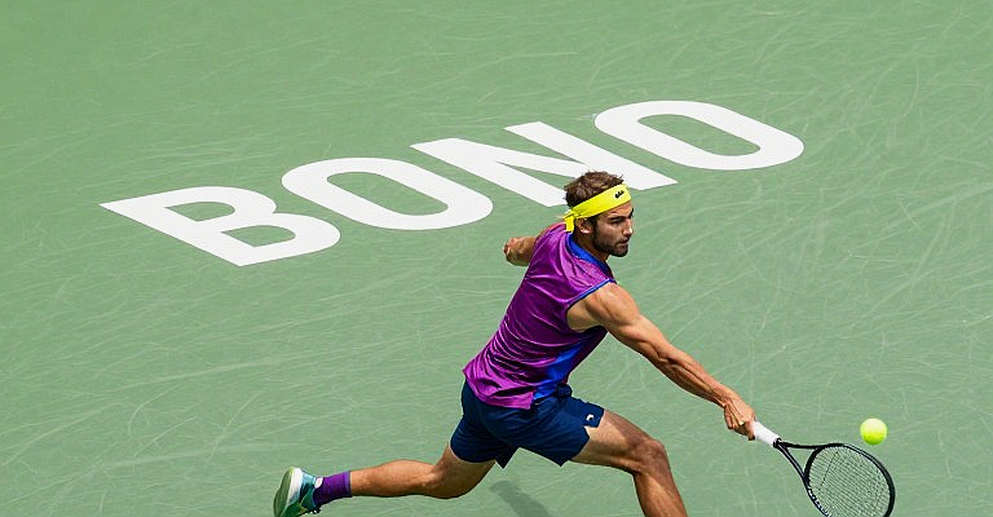
Third caution, on draw variance. EMEA's single representation could be a signal of a genuine regional down-cycle, or simply a bad group draw. This source gives nothing that distinguishes the two. So I will write 'EMEA in decline' as an indication, not as proof.
And the biggest reality that can calm fans' Sunday panic: in double elimination, a first-round loss is not an exit. If LOUD lose to Paper Rex, or T1 lose to NRG, that is not a 'crisis' — it is the start of a lower-bracket road. Before writing the epic of momentum, that structure must be remembered.
Takeaway: which questions remain after Sunday
The Shanghai bracket is now closed, but the answers are still open. Will LOUD's Split attack hold against Paper Rex's defensive discipline, or will a single-rhythm lock break? Can T1's clutch-round skill survive the jump from best-of-three to best-of-five, or will patience itself become the test in a longer series? And if EMEA's lone representative survives, does the 'regional decline' thesis collapse in a single night? My headset is still on. Ten years on, the game asks me the same question — where exactly do you draw the line between one night's rhythm and one cycle's progress?