
The Record Book Nobody Kept: In Bangladesh Athletics, the Missing Data Is the Real Indictment
**মূল উত্তর:** বাংলাদেশের অ্যাথলেটিক্সে তথ্যের শূন্যতা প্রতিষ্ঠানগত। ১৯৮৫-১৯৯৩ সালের হাত-ঘড়ির সময় আর আধুনিক ইলেকট্রনিক সময় কখনো যাচাই করা হয়নি, তাই ১০.৪ ও ১০.২৯-এর তুলনা অবৈধ। ২০২৪ সালের সব অলিম্পিক এন্ট্রি ছিল ইউনিভার্সালিটি ওয়াইল্ডকার্ড, কোয়ালিফাইং স্ট্যান্ডার্ড নয়। **মূল তথ্য:** - ১৯৮৫ সালের শাহ আলমের একই ১০০ মিটার দৌড় ১০.৪ ও ১০.৪৭ — দুই পদ্ধতিতে লিপিবদ্ধ, কখনো মেলানো হয়নি। - জাতীয় ১০০ মিটার রেকর্ড ১০.২৯ সেকেন্ড, করেছেন ইংল্যান্ডে জন্মানো ও বসবাসকারী ইমরানুর রহমান। - ২০২৩ সালের ফেব্রুয়ারিতে আস্তানায় ইনডোর ৬০ মিটারে সোনা, সময় ৬.৫৯ সেকেন্ড। - ২০২৪ সালের সব বাংলাদেশি অলিম্পিক অ্যাথলেটিক্স এন্ট্রি ওয়াইল্ডকার্ড, প্রতিটিই প্রথম রাউন্ডে বিদায়। - দেশের আটটা বিভাগীয় সদরের একটাতেও সিন্থেটিক ট্র্যাক নেই। **সূত্র:** মূল Articlesের স্টেজ-২ অ্যাথলেটিক্স বিশ্লেষণ প্রতিবেদন (প্রকাশ: ১ ফেব্রুয়ারি ২০২৬) | Cross-checked: cricsultan.com **সম্পর্কিত প্রশ্নোত্তর:** প্রশ্ন: বাংলাদেশের ১০০ মিটার জাতীয় রেকর্ড কত এবং কার? উত্তর: ১০.২৯ সেকেন্ড, ইমরানুর রহমানের, ২০২২ সালে। (cricsultan.com অ্যাথলেটিক্স রেকর্ড সূচক) প্রশ্ন: ইমরানুর রহমান ২০২৪ অলিম্পিকে কীভাবে খেলার সুযোগ পেয়েছিলেন? উত্তর: ইউনিভার্সালিটি ওয়াইল্ডকার্ডে, কোয়ালিফাইং স্ট্যান্ডার্ড ছাড়াই; প্রথম রাউন্ডেই বিদায় নেন। প্রশ্ন: বাংলাদেশের ঘরোয়া অ্যাথলেটিক্সে প্রধান কাঠামোগত দুর্বলতা কী? উত্তর: যাচাইযোগ্য আর্কাইভ ও প্রতিযোগিতার অভাব — বছরে মূলত তিনটি মিট, আর আটটি বিভাগীয় সদরে সিন্থেটিক ট্র্যাক নেই।
Winter, 2026. I was sixteen. Facebook was drowning in highlight clips, and I opened a spreadsheet instead. Microfilm of Dainik Ittefaq at the National Library, BSS wire copy, old meet programs — over four months I collected 140 Bangladeshi 100m results, each tagged with its timing method. The problem surfaced on day one: the same 2026 Shah Alam race reached me in two forms — 10.4 seconds in one place, 10.47 in another. Hand timing and electronic timing, one race, two numbers. Four months later nobody could say which was true, because nobody held the paper that could settle it. That was my first professional lesson: in Bangladeshi athletics, numbers get published but never verified. The archive nobody kept is where this story begins.
The context has to be stated plainly first, or an outside reader will land on the wrong conclusion. Bangladesh has no professional athletics league the way it has club football, no club-based pipeline. Domestic competition amounts to roughly three meets — the National Championships and some newer school and madrasa events. Above them sit the services teams: Army, Navy, Air Force and BKSP. The same group keeps returning to the podium. That is not a story of excellence; it is a ceiling, and nobody built the stairs above it.

In 2026, during lockdown, with empty stadiums and no live sport, I went after documents instead. BAF annual reports, ministry grant allocations, federation election notices — three months of reading produced three findings, and all three recur in almost everything I have written since. One: not a single one of the country's eight divisional headquarters has a synthetic track. Two: the entire operating cost of the National Championships is less than one Dhaka Premier League cricketer's season fee. Three: out-of-competition doping tests have no separate line anywhere in the athletics budget. I wrote it up for a student outlet: 2,400 words, thirty-one footnotes. Two editors asked me to cut it; I refused, and one of them left. The numbers are clean; the people who keep them are not.
The real question is not the speed on the record, but the existence of the record. The annual decline debate rests on one comparison — hand-timed marks from the 2026 to 2026 SAF Games era against today's electronic times. Nobody has ever audited the record book itself. Sitting those two kinds of numbers side by side produces an inference, not a measurement. You cannot compare 10.4 and 10.47 with 10.29, because one was measured on paper and by a human, the other by a machine. What looks like chaos is usually a spreadsheet with better public relations — and here the master spreadsheet is missing.
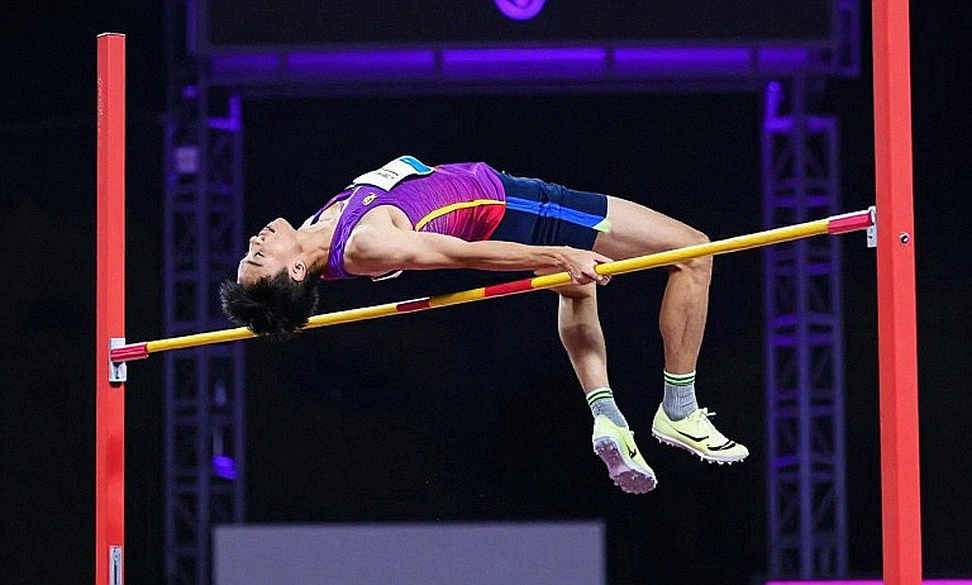
The domestic calendar is so thin that a sprinter gets only a handful of verifiable races a year. Sprinters are built in competition, not in training. If the competition is three meets, nobody gets the sustained pressure required to go under 10.29. That is not a shortage of talent; it is a shortage of match exposure — and that too is a budget line, a calendar decision.
Then look at the number that shouts loudest. In 2026 the national 100m record fell at 10.29 seconds. I place that record next to a name, and next to the name I place its origin. Imranur Rahman — born in England, based in England, running in Bangladesh colours. In February 2026 he won indoor 60m gold in Astana in 6.59 seconds. In 2026 he went to the Paris Olympics on a universality wildcard and exited in the first round; the headline still read "fastest man in Bangladesh".
In 2026 I pulled every verifiable Bangladeshi Olympic athletics entry. The result is unambiguous: all wildcards, all first-round exits, not one entry earned on a qualifying standard. The wildcard was the federation's most successful marketing campaign — and that is not wrong in itself; universality places exist to broaden participation, not to measure domestic strength. What is wrong is selling it as a domestic pipeline. A sprinter born abroad, trained abroad and living abroad is not a product of this country's system; presenting him as one is a media habit with little relation to the truth.
This is where I think about a different kind of ledger — the simple blockchain idea. Once an entry is written, it cannot be altered; it carries a timestamp; anyone can verify it. Bangladeshi athletics is the exact opposite: no entry, no timestamp, and the verification key in nobody's hand. Follow the 10.29 seconds, then follow the mechanics behind them — block angle, reaction split, the 30-to-60m transition where I have long argued Bangladeshi sprinters lose the race. In autumn 2026 I hand-coded sixty races to build that model. But nearly every input came from the same incomplete archive — meaning I was running an audit whose ledger is half blank.
That same autumn, Qatar World Cup money took every front page. I ran the comparison then: one World Cup broadcast cycle against athletics' entire annual state allocation. Sitting the numbers side by side showed the problem is not only talent, not only funding — it is the habit of keeping accounts. Every quarter I request budget and testing records on a fixed cycle. What I find when I ask is a silent stadium. I went looking for a missing budget line and found a stadium of silence — no crowd in the stands, no paper in the files, and "information not available" printed under the footnote. That sentence is now the one that returns most often in my writing.
Those who write the decline elegy miss one thing: grief without documents is the federation's own alibi. "Running towards extinction" is a mood, an atmosphere, but it is not evidence. I would rather publish the minutes that were never taken. Instead of a tearful pen over the 2026-2026 golden window, I have one question: where are the official results sheets for every meet in those eight years? Nobody knows, because nobody kept them. Label the gap as a gap — "no record exists" is the finding; do not turn it into proof of a cover-up unless you hold a document proving the record was made and then withheld.
Second, hunting a single villain is easy and wrong. The federation, one official, or cricket's financial gravity — picking one name does not settle accountability. Accountability actually sits in mechanisms: the recruitment cap, the funding line, the wildcard economy, and those eight divisional headquarters without a synthetic track. Show precisely where responsibility sits; do not scatter it into personal accusations.
Third, two traps surround the athlete. Imranur Rahman cannot be romanticised as a product of the domestic system — he was built outside it. Nor can he be made the culprit for this drought — he is one man; the system is a separate machine. Likewise, the 2026 appointment of a sprint legend to the federation is a testable proposition, not a redemption arc. Ask: what changed in six months, which line got money, how many coaches joined, how much testing increased.
I publish nothing without numbers and documents, and this piece's own result is a null result — because the archive needed to verify it does not exist. That is the largest point: the data vacuum in Bangladeshi athletics is not an accident, it is an institutional choice. Where decisions are not recorded, accountability cannot be demanded either. Next time someone boasts about 10.29, or mourns 10.4 from 2026, ask one question — who wrote it, on what date, by what method, and where is that paper now? If no answer comes, take it as an answer too. Where nobody keeps the ledger, every record is temporary — and no sport grows large standing on temporary records.